
1. Silicon Valley just put a price tag on something you care about.
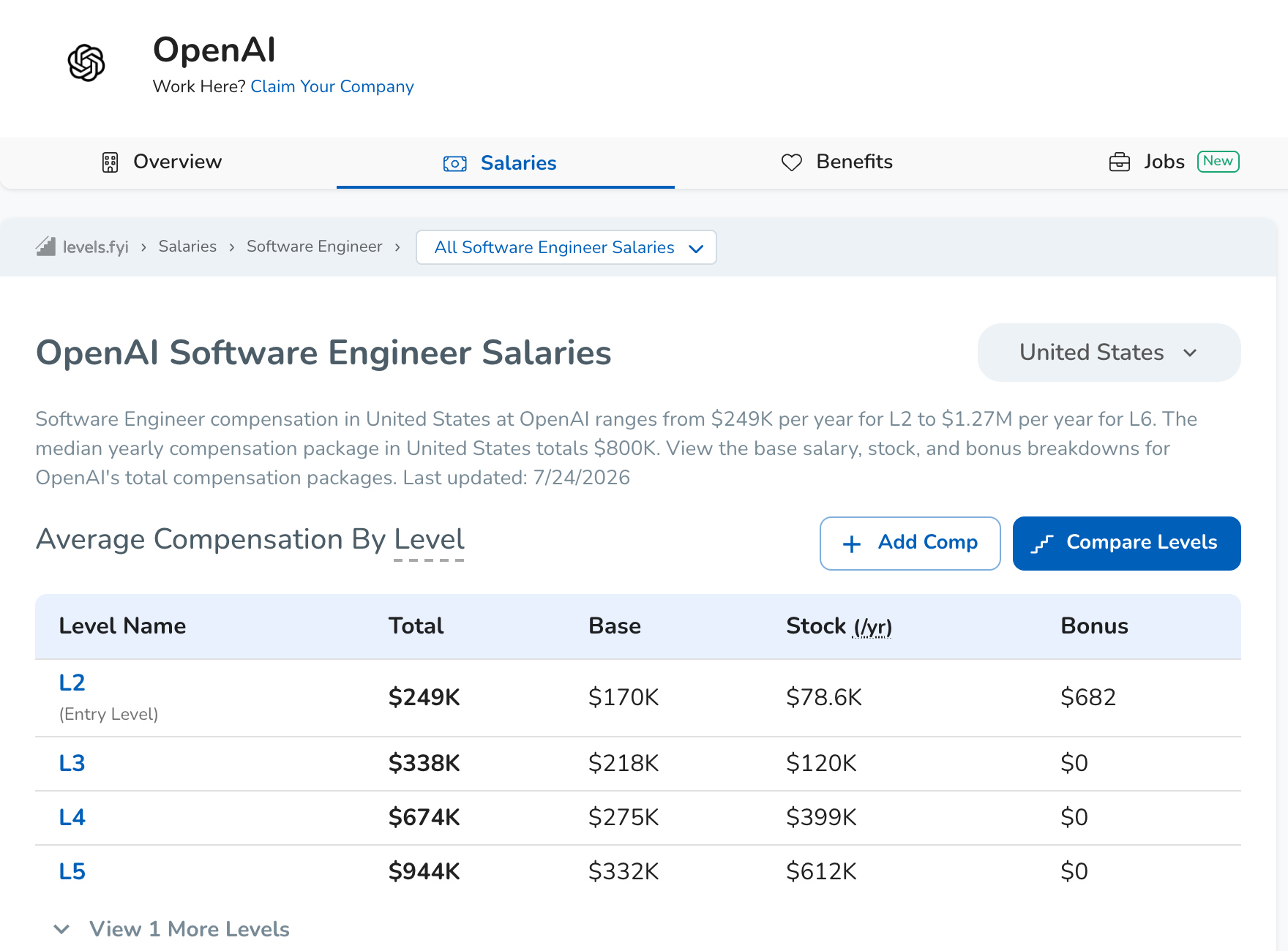
There's a job in tech right now with postings up 729% in a single year, by Indeed's count. The companies you've heard of are paying seriously for it: at OpenAI, the pay ladder for these roles tops out above $1.2 million a year (a healthy chunk of that in stock, but real money regardless). Anthropic's median package runs around $750,000. And in May, OpenAI raised four billion dollars to launch an entire company that does nothing but this job.
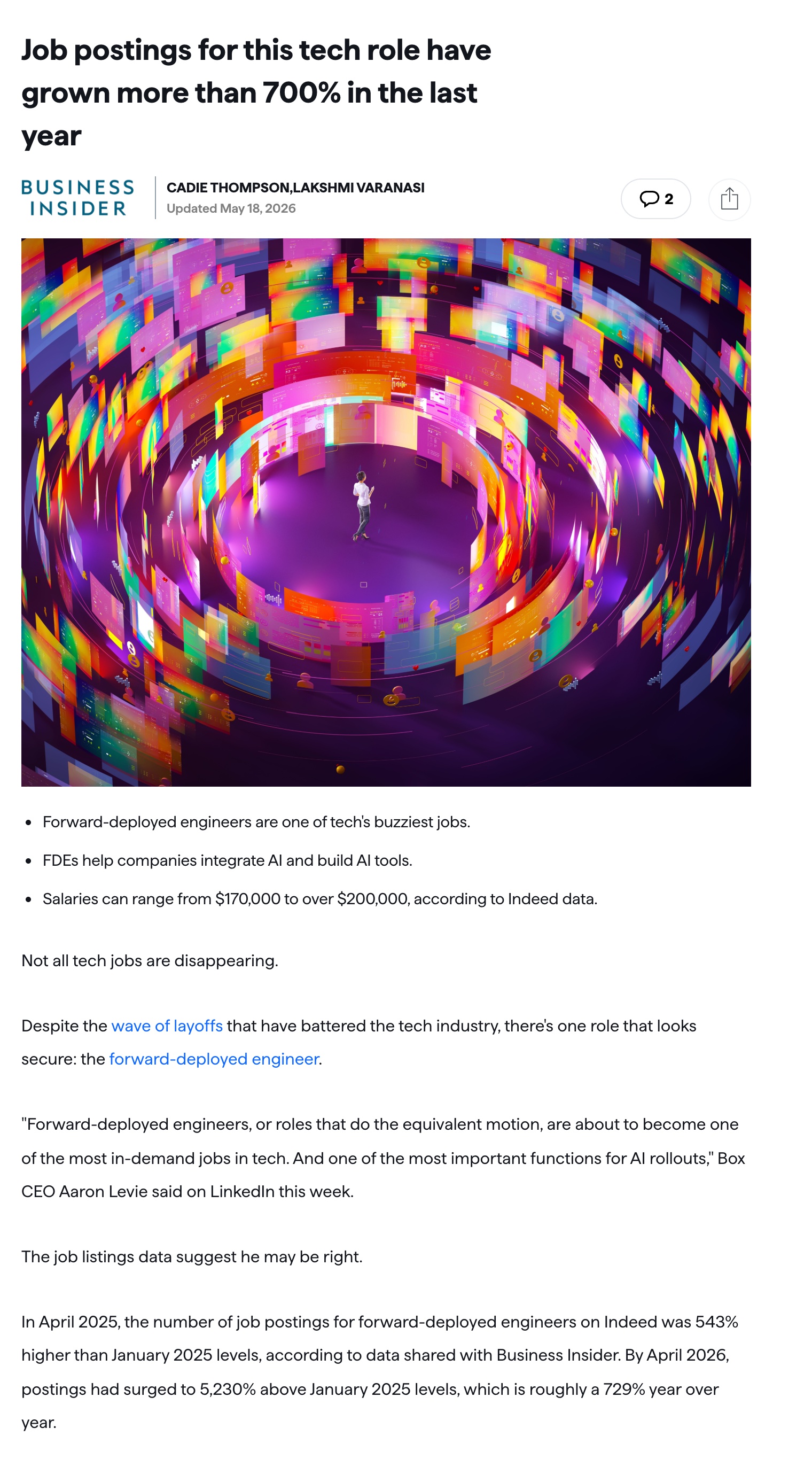
The job title is "Forward-Deployed Engineer." You've never heard of it, and you don't need to remember it. What you should remember is what all that money is actually buying.
2. The job, minus the jargon.
Strip the title off and here's the work: go inside a business. Learn how it actually runs: not the org-chart version, the real one. Figure out where AI genuinely pays, in dollars. Then make sure the thing gets built, and stay accountable until it's doing real work every day.
That's it. That's the million-dollar job.
Notice what it isn't. It isn't writing software in a lab, and it isn't a strategy deck. A defense-technology company called Palantir invented the role in the early 2010s because its customers didn't need more technology; they needed someone standing inside the business making the technology earn its keep. Fifteen years later, the biggest AI companies in the world have all arrived at the same conclusion, and they're paying like it.
Here's the sentence worth sitting with: the scarcest, most expensive thing in AI right now is not the software. The software is cheap and getting cheaper. The scarce thing is a person accountable for the outcome inside a real business.
3. Why the job exists: most AI projects go nowhere.
MIT studied more than 300 corporate AI deployments and found that only about 5% produced measurable profit-and-loss impact. Ninety-five percent of the pilots, with tens of billions of dollars behind them, produced nothing you could point to on a financial statement.
(Candor, because you'd rather hear it from me: that study has critics, and they have a point. It counted a project a failure if it didn't reach the P&L within about six months, which is a strict bar, and it set aside softer productivity gains. Directionally, though, nobody serious disputes it. Most corporate AI effort isn't landing.)
The reason it isn't landing is not that the software is bad. It's that in the 95%, nobody owned the outcome. A vendor sold a tool. A consultant left a binder. An internal champion got busy. The 5% that worked had someone standing in the middle of it: someone who knew the company's own numbers, picked the right thing to build, and stayed until it was running.
The market looked at that gap and priced it at up to a million dollars a year. Given what's at stake for a Fortune 500, that's arguably a bargain.
4. Why you'll never hire one, and why the ones for rent aren't built for you.
Now run the math for a real company. Say you do $5 million in revenue. A $500,000 hire is 10% of your top line before they've found you a single dollar. Even if you wanted to pay it, you'd be bidding against OpenAI for a person who has roughly three open jobs waiting for every qualified candidate. This hire is not happening, and it shouldn't.
"Fine," you might say, "I'll rent one." Here's the catch nobody prints on the brochure. The venture firm a16z wrote the defining essay on this trend, and the title says the quiet part out loud: "Trading Margin for Moat." The giants deploy these experts at a loss, on purpose, because the expert's real job is to build the vendor's moat inside your business. Every workflow they wire up runs on their platform and lives in their person's head. The better they do their job, the harder you are to leave.
For a Fortune 500 with a procurement department and in-house counsel, maybe that's a fair trade. For an owner-operated company, it's a story you've already paid tuition on: the agency you couldn't fire because they held the keys.
5. What a fifty-person company does instead.
You don't need the hire. You need the function: sized to your business and pointed at your own numbers.
That's my practice. I put two dollar figures on AI in your business. The Floor is what it saves you: payroll and hours arithmetic you can check against your own books. The Ceiling is what it makes you able to do that you can't today: built from your own bids, your intake, your turned-away work, and never invented for you. Then we take one rock off that map and install it (built by your own operator, by my vetted bench, or by my agents), and it's live and doing real work in 90 days, or I keep working for free.
And here's the part that separates this from the million-dollar version: you end up independent. Every system ships with a ten-minute video and a written doc. The person you designate learns every piece as it gets built. Nobody on your team has to become technical, and nothing in your business stops working if I disappear tomorrow.
The giants build their moat inside your business. I build yours.
6. The price tag was the point all along.
When the most sophisticated technology buyers on earth pay someone a million dollars a year to make AI actually work inside one company, that isn't hype. That's the market telling you what the outcome is worth. You don't need their hire, their platform, or their invoice. You need the same function, fractionally, in your own numbers, built so you own it.
The cost-cutting story is true. It's just not the interesting part.